Game Builder Features Every Developer Should Understand

Have you ever started working on a game and freaked out by all the tools and options you have available? Many new developers have great game ideas but don’t know which features really matter. A game engine can make development easier, but knowing how its features are implemented can help you make better and more fun games. Beginnerfriendly gaming platforms such as Astrocade an also facilitate the game creation process for amateurs.
This is everything that needs to be right for any designer before he or she even starts to consider development software. We’ll cover design tools, building a level, making players more comfortable, and how to start thinking about what tools you might need for your project.
Understand Core Features
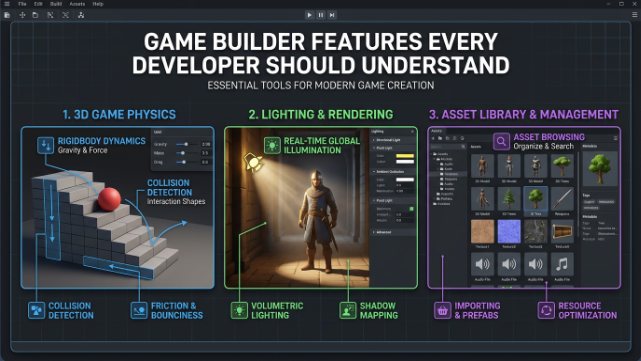
Prior to project development, the developers need to possess the strong basics of game builder. These fundamental aspects will usually include the creation of scenes, character control, physics settings, audio management and visual scripting. When you learn these tools, you will have strong foundation to build your game.
A good platform makes ordinary things easy and can do extraordinary things when necessary. For instance, functionality such as asset management and animation controls enable developers to deliver a fluid gameplay without the overhead of unnecessary complexity. Once you understand the basics, you can focus more on the creative side of things, rather than the technical side.
See also: How to Wash and Care for Your Hijabs
Explore Design Tools
The design tools have also a big influence on having the interesting game play. A game builder sometimes has options to design characters, environments, animations and user interfaces. With these tools, the creators are able to define “how it looks” and “mood” of the game. Most contemporary platforms include drag and drop editors, ready made code, and visual scripting tools. These features are useful for beginners because they reduce the need to know advanced coding.But they also let high-end developers work faster and iterate on ideas.
Create Game Levels
Game development Level Creation is probably the most important part of game development. Good level design guides players, challenges them and keeps the experience fun and interesting. Most game engines have some sort of mapping tool for placing objects, creating maps and setting their difficulty.
Developers need to take the focus towards balance when level designing.A game ought to be challenging, not infuriating. Checkpoints, rewards, hazards, and other interactive elements may add to the flow of gameplay.
Improve Player Experience
A good game is not just good looking or has lots of features.It is the player experience that dictates whether or not they have fun using your game and if they’ll return. Smooth controls, clear instructions, solid performance, and fun gameplay are the things developers should focus on.
A good game builder enables developers to play around on different concepts and gameplay. User interface tools, animation settings and performance control are among the features that enable developers to put the finishing touches on their games. Even minor things like sound effects or responsive controls can have a profound effect.
Choose Right Tools
Which platform is best for you depends on your goals, your level of experience, and the kind of game you want to create.Certain software is more suited to simple 2D work, while other can be used with intricate 3D worlds and other such features.
When you’re choosing a platform, look out for things like how easy the software is to use, what tutorials are available, how good the community is, what options you have when you export, and how customizable it is. A new user may wish for simple visual tools, while a more experienced developer may require advanced programming capabilities.
Conclusion
Learning the mechanics of a game builder can be a valuable first step for aspiring developers. These platforms often provide everything from core systems and design tools to level creation and player-experience features, giving creators the flexibility to turn their ideas into engaging projects. As developers become more familiar with each tool, they gain the confidence to experiment and build more ambitious games.
Choosing the right platform can also make the development process smoother and more enjoyable. With so many options available today, beginners and experienced developers alike can find tools that suit their skills and goals. Keep practicing, continue learning, and don’t be afraid to experiment with ideas inspired by a game like Tiny Planet Chopper. With the right tools and a little guidance, you can create an original game that you and your community will enjoy.
Frequently Asked Questions
What is a game builder?
A game engine is a software system designed to facilitate the game development process that allows designers and developers to more easily and efficiently create games by decreasing production time. It streamlines the development process in multiple ways.
Do I need coding skills to use a game builder?
No, not really. There are many beginner friendly platforms but they are all visual scripting or drag and drop. However, with a knowledge of code, developers can create even more advanced functionality.
Which features are most important in a game builder?
Key features include level editors, asset management, animation tools, physics engines, testing facilities, and publishing support. The best features will depend on your project requirements.
Can beginners create professional games with these tools?
The right tool and a little bit of practice can result in games with fantastic visual flair even from new game designers. Many successful developers start out with smaller projects and refine their skills along the way.
How do I choose the best game builder?
When selecting a platform, take into account your objectives, game type, skill level, budget and desired features. Testing different products before buying can help you find the best fit.