How to Plan an LED Strip Lighting System for Different Spaces

LED strip lighting can fit into many different spaces, from residential interiors and display areas to architectural features and commercial settings. However, choosing a strip based only on appearance can lead to problems during installation. Voltage, power consumption, strip length, environmental conditions, and heat management all affect how the lighting system performs.
A practical lighting plan starts by understanding where the lights will be installed and what they need to accomplish. Once those details are clear, selecting the appropriate strip and power equipment becomes much easier.
Start With the Purpose of the Lighting
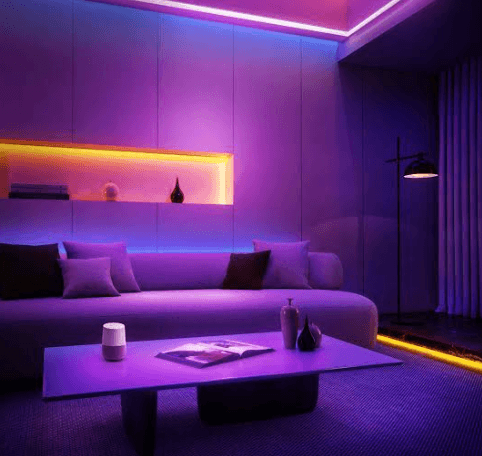
The first step is to decide what the lighting needs to do. Cove lighting may require a soft and continuous glow, while signage or display lighting may need stronger illumination. Task lighting usually requires more focused brightness, whereas decorative lighting can place greater emphasis on color and visual effect.
The installation location also matters. A strip installed inside a cabinet has different requirements from one used around a window, canopy, corridor, or outdoor structure. Before choosing the lighting, consider the available space, required brightness, operating hours, and surrounding conditions.
Choose the Right LED Strip for the Installation
LED strips are available in different LED types, densities, voltages, power ratings, colors, and waterproofing levels. For example, 3528 strips can have 300 LEDs across five meters and a maximum power consumption of around 4.8W per meter. Some 5050 strips can provide higher output and may support 12V or 24V operation.
Waterproofing is another important consideration. IP65 and IP68 versions can be considered for areas where moisture may be present, while indoor installations may use non-waterproof designs. The correct choice depends on the actual environment rather than simply choosing the highest protection rating.
Why Flexibility Matters During Installation
The physical shape of a space can make installation difficult. Flexible LED Strips can follow curved surfaces and fit into narrow areas where rigid lighting products would be harder to position. They can be used for cabinets, shelves, architectural contours, signage, archways, and other locations where the lighting needs to follow a specific path.
Cutting length is also important. Some strips can be cut at defined intervals and connected again with suitable accessories. For example, certain 24V strips can be cut by specific LED groups, making it easier to adjust the overall length to the installation area.
Match the Power Supply to the Lighting System
The power source should always match the strip’s voltage and total power requirements. A 12V strip requires a compatible 12V DC supply, while a 24V strip requires a 24V DC supply. Using an incorrect voltage can affect performance and may damage the lighting components.
An LED Power Supply should also have enough capacity for the connected load. If a strip consumes 10W per meter and the installation uses five meters, the basic load is 50W. The power supply should then provide suitable capacity above this requirement rather than operating continuously at its maximum rating.
Calculate Power Requirements Before Installation
Calculating the total power requirement is a simple but important step. Multiply the strip’s power consumption per meter by the total length being installed.
For example, a 5050 strip rated at 17W per meter would require 85W for five meters. A different strip rated at 4.8W per meter would require only 24W for the same length. This difference shows why you should check the specifications of the exact strip before selecting the power equipment.
Longer installations may also require additional planning because voltage drop can affect brightness. A 24V system generally experiences less voltage drop than a comparable 12V system over longer runs, which can help maintain more consistent illumination.
Consider Heat, Ventilation, and Mounting
LED strips generate heat during operation, especially higher-power models. Installing them on a suitable surface can help manage this heat. Aluminum profiles are often useful because they provide a stable mounting surface and help transfer heat away from the strip.
Avoid placing high-power strips inside tightly enclosed areas without considering heat dissipation. The surrounding temperature and installation surface can influence operating conditions over time.
Plan Wiring and Connections Carefully
Good wiring planning can prevent uneven brightness and unnecessary changes later. Check cable length, connection points, polarity, and the location of the power source before installation. Longer runs may require additional power injection or separate sections depending on the strip design.
Controllers also need to match the system. For example, an RGB touch controller may operate within a 12V to 24V range and use PWM dimming. Its load capacity still needs to match the connected lighting system.
Keep Installation Conditions in Mind
The environment can influence which strip is suitable. Outdoor or moisture-prone areas may require a higher waterproof rating, while indoor decorative applications may not need additional protection. For RGB systems, check the controller, voltage, number of channels, and total load before connecting the strip.
Manufacturer information can also help clarify cutting lengths, PCB dimensions, LED quantity, viewing angle, and operating voltage. These details make it easier to compare options based on actual installation requirements.
Shenzhen Dekingled Co., Ltd. was established in 2014 and is located at 4th Floor, Building C, SanMing Industrial Park, Shiyan Town, Bao’an District, Shenzhen, China.
For technical inquiries, contacts include Emily and Tony Wang, with email addresses emily_led@dekingled.com and tonywang.deking@gmail.com.
See also: Elevate Your Local Business with AllReact Digital Marketing
Final Checklist Before Installation
Before starting an LED strip installation, check:
• Strip voltage and power consumption
• Total strip length
• Required power supply capacity
• Cutting and connection intervals
• Waterproofing requirements
• Heat dissipation and mounting surface
• Cable length and connection points
• Controller compatibility, if required
• Installation environment and operating temperature
A successful LED lighting system depends on matching each component to the actual installation. When you consider the purpose of the lighting, strip specifications, power requirements, wiring, and environmental conditions together, you can create a system that provides consistent illumination and remains practical to maintain.