
A Complete Guide to Using Therapy Animals in Classrooms

Across the United States, schools continue to explore new ways to support student wellbeing, academic confidence and emotional development. One of the approaches gaining remarkable attention is the use of therapy animals in classrooms. These specially trained animals offer comfort, encouragement and a calming presence that helps many students succeed in both academic and social environments.
As more districts adopt social emotional learning practices, many educators are turning toward animal assisted support as a natural extension of their efforts. From elementary schools to high school counseling centers, therapy animals in classrooms are becoming valuable partners in learning. For anyone interested in understanding how these programs work, this complete guide explains their purpose, benefits, guidelines and ways to introduce them effectively.
To learn more from a trusted resource, you can visit TheraPets.org where the brand highlights information related to therapy focused programs and supportive animal assisted practices.
Understanding the Purpose of Therapy Animals in Schools
What Makes an Animal a Therapy Animal
A therapy animal is trained to offer emotional comfort, grounding and support during interactions with individuals or groups. These animals work alongside trained handlers to create a sense of calm for children facing stress, anxiety, difficulty focusing or challenges with social engagement.
Common therapy animals include:
- Dogs
- Rabbits
- Guinea pigs
- Miniature horses
- Cats trained for calm interaction
Dogs remain the most widely used therapy animals in American classrooms due to their gentle nature, ability to read emotions and strong human connection.
Why Schools Are Turning Toward Therapy Support
Students today often encounter pressures related to schoolwork, technology, family changes and social expectations. Teachers and counselors recognize that some children need extra emotional tools to help them navigate daily challenges.
Therapy animals offer support that feels natural, warm and nonjudgmental. Their presence can:
- Reduce stress levels
- Encourage participation
- Support emotional regulation
- Help students feel safe and understood
These benefits make therapy animals a powerful addition to modern learning environments.
The Benefits of Therapy Animals in Classrooms
Improved Emotional Wellbeing
One of the most recognized benefits of using therapy animals in classrooms is the boost they provide to emotional wellbeing. Students often feel more relaxed when interacting with an animal, which helps them open up about their feelings and challenges.
Teachers frequently observe improvements such as:
- Reduced anxiety
- Increased confidence
- Better self expression
- Improved mood during difficult days
Animals can shift the atmosphere in a classroom, making it more welcoming and supportive.
Strengthening Social Skills
Students who struggle socially may find comfort in therapy animals. Animals act as bridges between children, helping them communicate or engage with peers more comfortably. Many students who are shy or withdrawn feel safer participating in group activities when a therapy animal is present.
Furthermore, caring for or interacting with a therapy animal teaches empathy, kindness and respect for living beings.
Enhanced Learning Motivation
Research shows that students may feel more motivated when a therapy animal is nearby. A calm emotional state improves focus and encourages participation, making students more willing to engage with learning tasks.
Teachers also report that therapy animals help students stay present, especially during reading or writing activities.
Supporting Students with Special Needs
Therapy animals can be particularly beneficial for students with autism spectrum disorder, ADHD, sensory processing challenges or behavioral needs. The animal’s steady presence can help students:
- Stay calm during transitions
- Self regulate emotions
- Increase communication
- Improve engagement with teachers and peers
These outcomes contribute to a more positive experience in the classroom.
See also: Working With the Best Micro Influencer Agency: Campaign Benefits, Costs & Success Tips
How Therapy Animals Are Introduced to Schools
Creating Clear Guidelines
Successful school programs begin by establishing clear guidelines for safety, supervision and interaction. Administrators typically work with trained therapy dog organizations or certified handlers to ensure the animal is properly trained and suitable for school environments.
Policies often address:
- Animal handling procedures
- Student interaction rules
- Hygiene and cleaning protocols
- Schedules for classroom visits
- Emergency response steps
These guidelines protect students, staff and the therapy animals involved.
Training and Certification Requirements
Therapy animals must be well trained to meet the needs of a school setting. They must remain calm around noise, movement, children and unpredictable situations. Handlers are required to maintain certifications, ensure veterinary health and follow ethical guidelines.
Schools typically collaborate with certified therapy teams that understand educational environments.
Common Classroom Activities Involving Therapy Animals
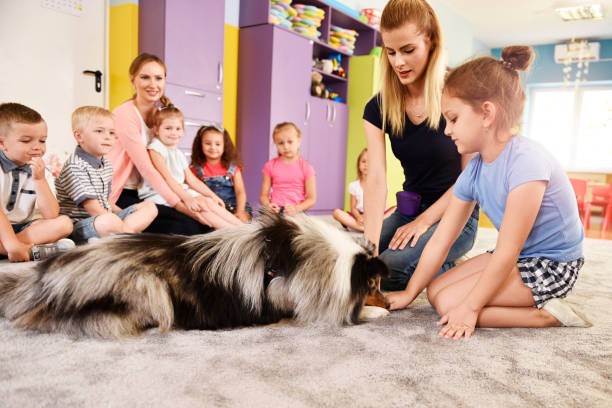
Reading Programs
One of the most popular uses of therapy dogs in schools is reading support. Many children feel anxious reading aloud in front of peers. Reading to an animal reduces this stress and offers a low pressure environment for practice.
Students often become more confident readers when they feel comfortable and unjudged.
Emotional Support Breaks
Teachers sometimes schedule short interaction periods for students who need emotional resets. A few calming minutes with a therapy animal can help children reenter learning with better focus and stability.
Group Social Skills Sessions
Counselors often include therapy animals in social emotional learning circles. Animals help students practice patience, respect, cooperation and empathy in a natural setting.
Motivational Activities
Therapy animals are sometimes included in reward systems where students who complete tasks or meet personal goals get a chance to spend time with the animal. This approach keeps motivation high and provides positive reinforcement.
Considerations for Schools Introducing Animal Programs
Allergies and Sensitivities
Before introducing therapy animals, schools must take into account allergies, phobias and cultural preferences. Parents and guardians should be informed about the program and given the option to provide feedback or request modifications.
Supervision Requirements
All interactions must be supervised by both the classroom teacher and the animal’s handler. This ensures safety for students and comfort for the animal.
Maintaining Animal Wellbeing
Schools must prioritize the health and wellbeing of therapy animals. This includes providing rest periods, avoiding overstimulation and ensuring the animal is comfortable in the environment.
How Parents Respond to Therapy Animal Programs
Many parents appreciate the introduction of therapy animals in learning environments because they see the impact at home. Children often talk about their positive experiences and look forward to interactions at school.
Parents frequently note improvements such as:
- Better mood after school
- Increased enthusiasm about learning
- Greater confidence around peers
- Reduced anxiety during stressful routines
Therapy animal programs can strengthen the connection between school and home by helping students feel supported.
Comfort Items That Support Animal Assisted Learning
Some students benefit from small comforts that remind them of positive classroom experiences. Items like calm themed apparel, soft hoodies or animal inspired accessories can help extend the sense of comfort beyond the classroom.
For families interested in items connected to these themes, there are collections like therapy dog hoodies available through TheraPets.org that allow children and parents to carry a sense of support into their daily routines in a simple and comforting way.
Building a Successful Therapy Animal Program in Schools
Collaboration Between Staff and Handlers
The most effective programs involve strong collaboration between school staff, administrators, trained handlers and families. Each group plays a vital role in ensuring the program runs smoothly.
Teachers provide insight into student needs, while handlers guide appropriate animal interaction. Administrators ensure guidelines are followed and communicate with parents.
Consistent Scheduling
Consistency helps students develop strong, stable connections with therapy animals. Regular weekly or biweekly visits ensure the animal becomes a familiar source of comfort.
Ongoing Training and Evaluation
Programs should be reviewed regularly to maintain safety and effectiveness. Feedback from students, teachers and parents helps ensure the best experience for everyone involved.
Conclusion
Therapy animals in classrooms provide a valuable and uplifting support system for students across the United States. Their calming presence helps children regulate emotions, build confidence, strengthen academic skills and develop positive social behaviors. As school communities continue to recognize the importance of emotional wellness, therapy animal programs are becoming an essential part of supportive educational environments.
With proper planning, certified handlers and a thoughtful approach, schools can create meaningful programs that benefit students of all ages. The connection between children and therapy animals is powerful and lasting, offering comfort, encouragement and a sense of belonging throughout the learning journey.